
It happens to everyone eventually. You pull over to let a plow by, you misjudge a turn into a parking spot, or you slide gently off a side street and the front wheels sink into a pile of packed snow. Suddenly your car is a very expensive lawn ornament. If you are searching for what to do about a car stuck in a snowbank in Edmonton, this guide walks through the sensible steps in order: how to stay safe, what you can safely try yourself, what makes things worse, and when it is time to call for a recovery truck.
We run Maxim Towing & Recovery out of north Edmonton, and winter is the season when our phones ring the most. Most of the stuck cars we see could have been freed with a few minutes of calm effort. A good number, though, ended up more stuck, or damaged, because the driver kept spinning the wheels for half an hour. This article is meant to help you tell the difference.
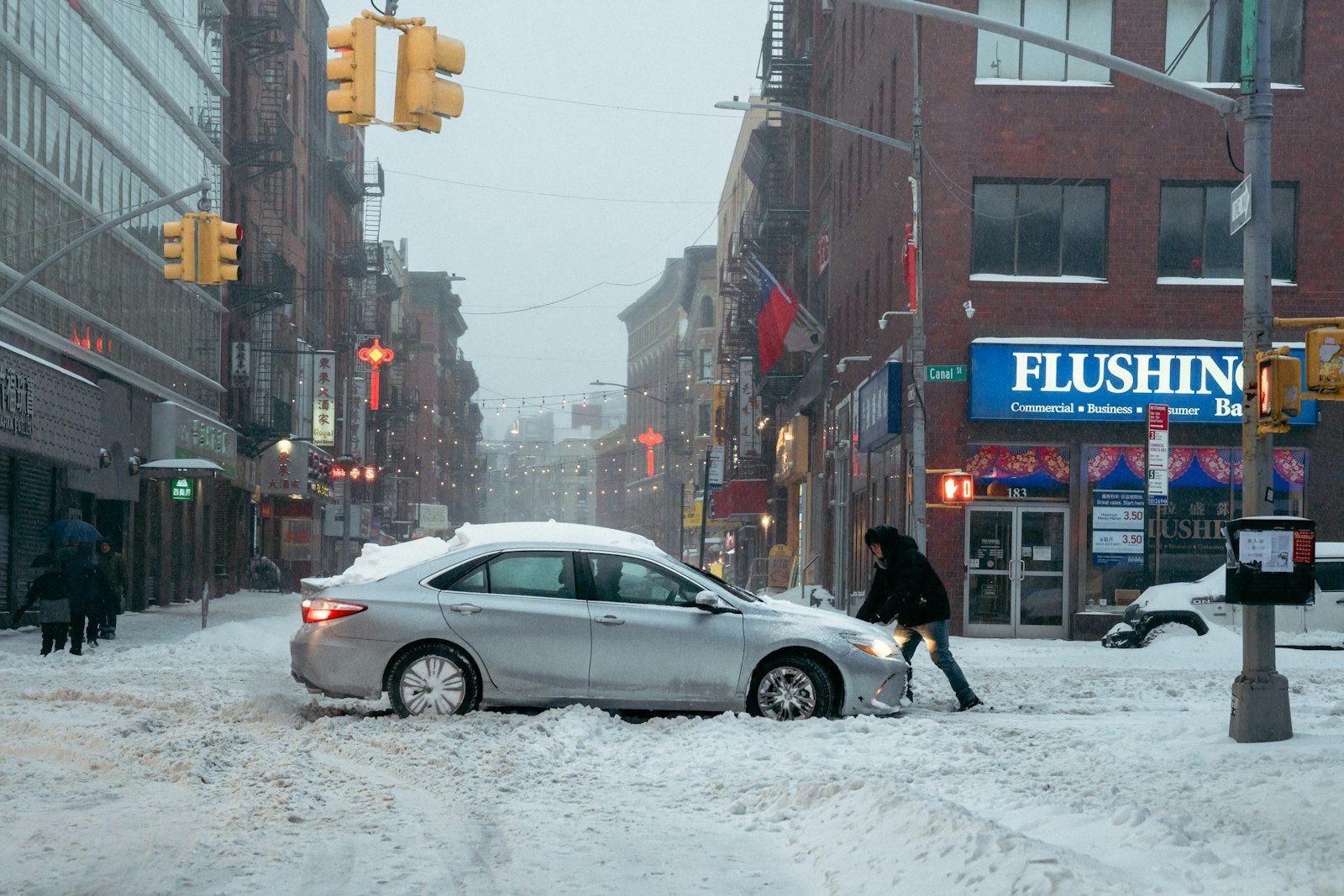
Step one: stop, breathe and check that you are safe
Before anything else, stop accelerating. The first instinct is to floor the pedal, and that is almost always the wrong move. Take your foot off, put the car in park, and look around.
- Are you visible? If you are on a road or in a lane that traffic uses, turn on your hazard lights. At night, keep the dome light on too.
- Is the exhaust pipe clear? Snow packed against the tailpipe can push exhaust fumes back into the cabin. Never sit in a running car with a blocked tailpipe.
- Are you hurt? If there was any impact, check yourself and your passengers before thinking about the car.
- Is it a safe place to stand? If you are on a busy road or a highway shoulder, it is usually safer to stay buckled inside with the hazards on and call for help than to walk around beside moving traffic.
If you are in an unsafe spot or cannot tell how deep the car is stuck, skip the DIY attempts and phone for a recovery truck right away. Your time and comfort matter more than saving a service call.
Step two: work out how stuck you really are
Not all stuck is equal. Get out if it is safe and look at the car from a few angles. You are trying to answer three questions.
Which wheels are stuck?
If only the drive wheels are spinning in loose snow, the car may be freeable with traction. If the car is sitting on its belly, with snow packed under the frame so that the tires barely touch the ground, no amount of acceleration will help. That is called being high-centred, and it needs digging or a pull.
How deep and how hard is the snow?
Soft, fresh powder is much easier to deal with than a plow-pushed ridge that has frozen into a hard wall. Edmonton’s freeze and thaw cycles are famous for turning a soft bank into something close to concrete overnight.
What is in front of or behind you?
Look for a ditch edge, a curb, a hidden fire hydrant, a guardrail or a slope. If the car could slide further once it starts moving, you have a different job than if it is simply resting in a flat, packed spot.
Step three: what you can safely try yourself
If the car is lightly stuck, on level ground, in a place where traffic is not a concern, these steps often work. Do them in order and stop if you feel the car shifting toward danger.
Clear around the wheels and under the car
Use a small shovel, a dustpan or even a stiff piece of plastic to clear snow from in front of and behind all the drive wheels. Clear the snow under the front bumper and underneath the car too, especially if it is touching the frame. Clearing is not glamorous but it solves most light cases.
Add traction
Put something gritty or grippy in front of the drive wheels: sand, kitty litter, a bag of salt-free grit, or a pair of floor mats if you have nothing else. Place them so the tires can roll onto them, not spit them out. Many drivers keep a small bag of sand in the trunk for exactly this reason.
Use gentle throttle and a rocking motion
Turn the steering wheel straight if you can. Shift gently between drive and reverse, and use light throttle each way to build a small rocking motion. The goal is to pack a short path, not to launch the car. If the engine screams and the wheels just polish themselves into ice, stop.
Turn off traction control, only briefly
In deep snow, traction control can cut power when the wheels spin, which sometimes stops you from rocking free. Many vehicles have a button to switch it off for a short attempt. Turn it back on once you are moving again. Check your owner’s manual for how your vehicle behaves.
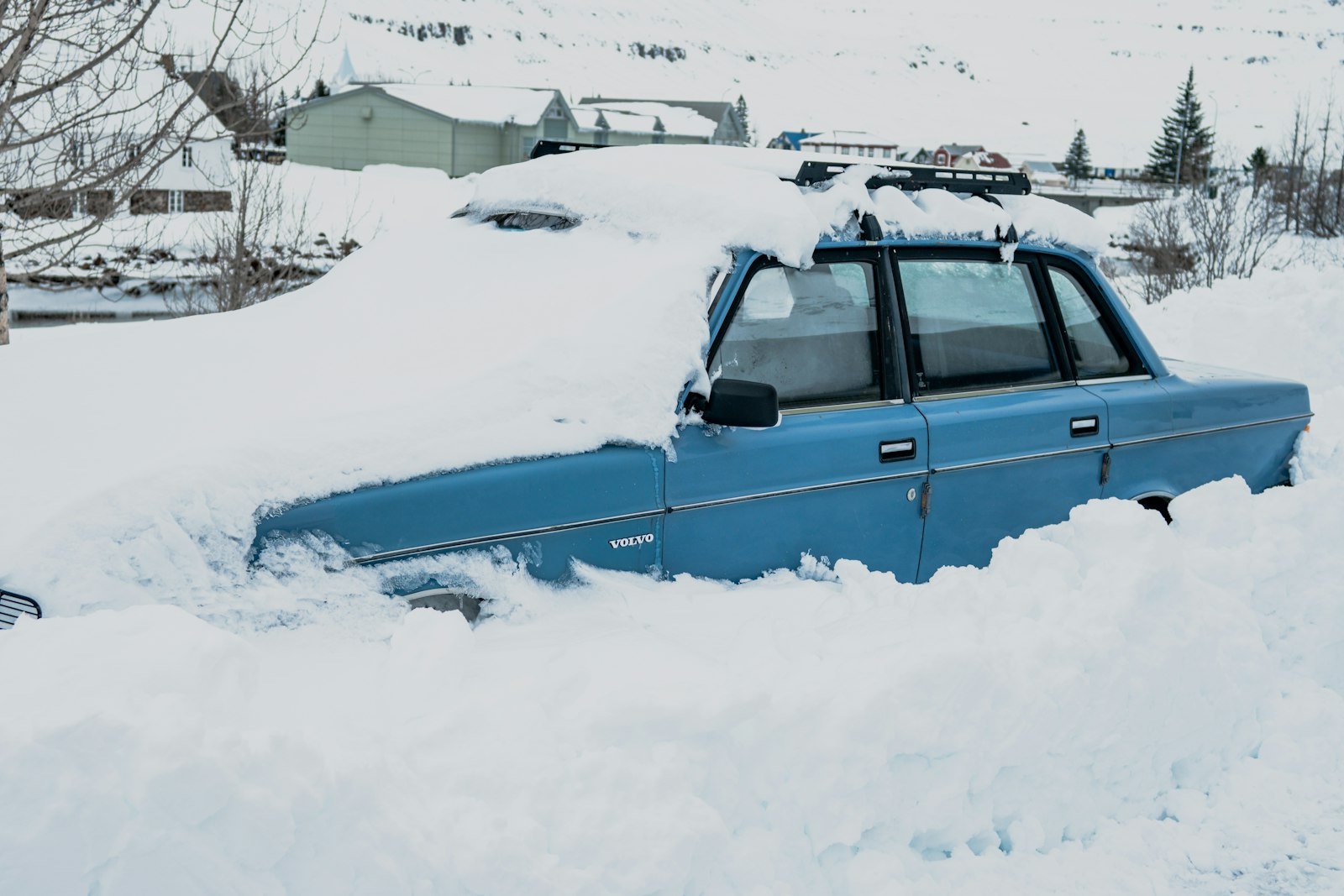
What not to do
A few common habits turn a small problem into a bigger one.
- Do not keep spinning the wheels. It digs the car deeper, polishes the snow into ice and heats the tires and drivetrain. It can also overheat an automatic transmission.
- Do not rev the engine hard against a stuck car. You can strain the transmission and the clutch.
- Do not let strangers pull you with a rope or chain. A snatch on a poor attachment point can tear off a bumper or break a tow hook. If a pull is needed, it should use proper recovery points and straps.
- Do not stand behind a car being pushed or pulled. A car that suddenly frees can lurch backward or sideways.
- Do not leave the engine running in a closed garage or with a blocked tailpipe. Carbon monoxide is odourless and dangerous.
- Do not walk away from a car on a highway shoulder at night. Stay visible and call for help.
When it is time to stop and call for a recovery truck
There is no shame in phoning for help. Some situations are simply better handled by someone with the right equipment. Call if any of these apply.
- The car is high-centred or the wheels are not touching the ground.
- You have tried digging and traction aids for ten or fifteen minutes with no movement.
- You are in a ditch, on a slope or beside moving traffic.
- You hear grinding, smell burning or see warning lights after spinning the wheels.
- The car is leaning, partly rolled or in water or slush that hides the real depth.
- It is extremely cold, you are alone or you have children or elderly passengers with you.
Our recovery service handles exactly these situations. We assess the position of the car, choose the safest pull direction, use rated straps and winch points and bring the vehicle back to solid ground. If the car cannot be driven afterward, we can put it on a flatbed and take it where you need it to go.
How a professional recovery works
People sometimes imagine a recovery as a driver hooking a chain and yanking. In practice it is slower and more careful than that. A typical stuck-in-snow recovery goes like this.
- Assessment. The operator walks around the vehicle, checks the ground and traffic, and decides where the truck should sit and which direction the pull should come from.
- Securing the area. Hazard lights, cones and sometimes a plan for traffic flow keep everyone safe.
- Identifying recovery points. Modern vehicles have designated tow hooks or recovery loops. Using any other part, such as a bumper cover or suspension arm, can cause damage.
- Attaching the winch or strap. A rated strap or cable is connected to the proper points, with protective sleeves if needed.
- A controlled pull. The vehicle is pulled slowly and steadily, not jerked, with someone watching for movement and clearance.
- Inspection and handover. Once the car is on solid ground, we check for visible damage or leaks and talk about whether it is safe to drive.
If the car is partly in a ditch or at an angle, the process includes more steps and more care. That is why asking for help early, before you have buried the car further, usually makes the job simpler.
Prevention: how to avoid getting stuck in the first place
You cannot avoid every snowbank, but a few habits cut the odds a lot.
- Look before you pull in. Plowed ridges at the end of a driveway or beside a curb can be deeper and harder than they look. Aim to drive through them straight and with some momentum, not at an angle.
- Keep a small winter kit. A compact shovel, a bag of sand or kitty litter, a flashlight, gloves and a blanket take almost no room. See our winter car emergency kit guide for what to keep in the car.
- Use proper winter tires. All-season tires lose a lot of grip in the cold. Winter tires make a measurable difference in snow and ice.
- Clear your car and the snow around it. Snow piled around the wheels freezes overnight into a trap.
- Park thoughtfully. Avoid parking right next to a plow ridge on the street. A few extra steps now can save a long morning later.
- Keep the fuel above a quarter tank. If you do get stuck, you can run the heater safely while you wait.
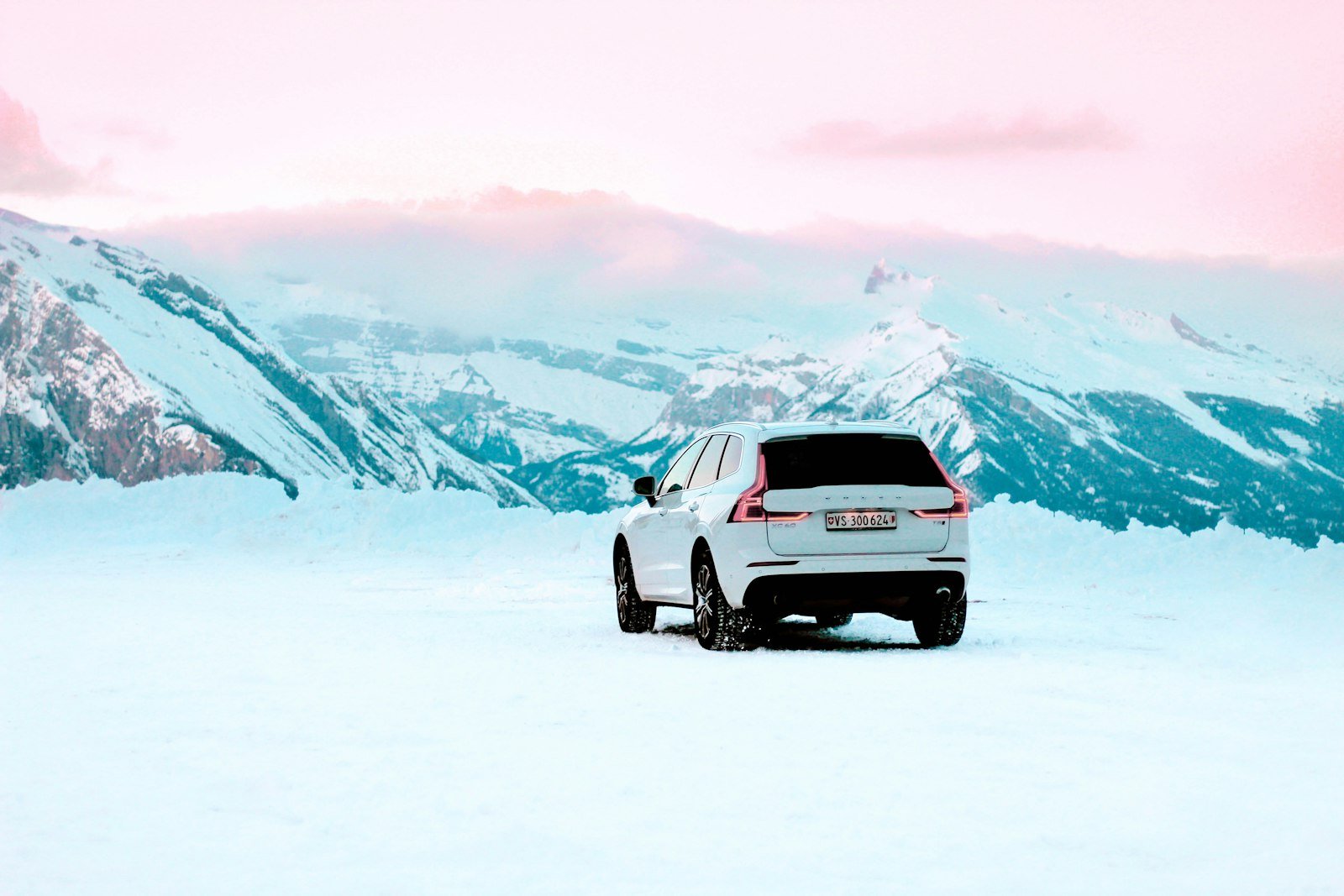
A word about AWD and 4×4 vehicles
Many people believe that an all-wheel-drive SUV or a pickup truck cannot get stuck. Sadly that is not true. These vehicles help you start and accelerate in slippery conditions, but they do not help when the car is sitting on its frame, or when a bank is deeper than the ground clearance. They also encourage confidence that leads people to try bigger banks and steeper ditches. If you drive one, the same steps apply, and the same caution applies when attempting a recovery. If the vehicle needs towing afterward, remember that most AWD and 4×4 vehicles should be transported on a flatbed. We explain why in our guide to flatbed vs hook and chain vs wheel lift and on our flatbed towing page.
What if you are stuck in a parking lot or an alley?
Private lots and back lanes have their own problems. Plow piles are often placed in the corners and edges, where cars like to end up. Ice patches hide under a thin layer of snow, and shared lanes are narrow enough that your stuck car may block others. Be polite, put on your hazards and, if you are blocking a lane, call for help sooner rather than later. A tow truck cannot always get into tight spaces without moving other vehicles, so tell the dispatcher about the layout when you call.
What to tell the dispatcher when you phone
A few details make the call faster and let the dispatcher send the right truck the first time.
- Your exact location, with the nearest cross street or landmark.
- The make, model and drivetrain: front-wheel, rear-wheel, all-wheel or four-wheel drive.
- How the car is stuck: snowbank, ditch, curb, underneath something, high-centred.
- Whether the car runs and whether it is drivable once freed.
- Any damage you can see, and whether anyone is hurt.
- Anything that could block access: a gate, a narrow lane, a low parkade.
We quote a typical arrival window of 30 to 45 minutes and tell you honestly if conditions will stretch it. If you want to know more about how pricing works, read our guide on how much towing costs in Edmonton.
Staying warm while you wait
If help will take a while, make yourself comfortable and safe. Keep the tailpipe clear and run the engine in short stretches, with a window cracked open, to take the chill off. Wear your layers, wrap up in any blanket you have and keep moving your hands and feet. Keep your phone charged by using the car charger sparingly. If there is any sign of drowsiness or headache while the engine is running, shut it off and get fresh air.
If you have a battery that struggles in cold weather, you may also have a second problem when the car is freed. Read our article on cold weather car battery tips and keep our number saved: (780) 604-4060.
Frequently asked questions
Can I get my car out of a snowbank by myself?
Often, yes, when it is lightly stuck on level ground. Clear snow around the wheels, add traction, and rock the car gently. Stop if you smell burning, hear grinding or the car is high-centred.
Will spinning my tires hurt the car?
It can. Prolonged wheel spin overheats the tires and drivetrain, polishes snow into ice and digs the car deeper. Short, gentle attempts are fine.
Does insurance cover getting pulled out of a snowbank?
Some policies and roadside plans include recovery, often with limits. Check your policy or phone your insurer. Tell the tow company if you have coverage.
How long does it take for a tow truck to reach me?
Our typical window is 30 to 45 minutes. Weather, distance and call volume can change that, and we will let you know honestly when they do.
Can a tow truck damage my car while pulling it out?
Not when it is done properly. Operators use rated straps and designated recovery points, pull slowly and check for clearance. Ask how the car will be attached before the pull begins.
What if my car is stuck on a highway shoulder?
Stay buckled inside with your hazards on if it is unsafe to stand outside, and phone for help. Do not try to dig beside moving traffic.
Stuck right now? We can help
If your car is stuck in a snowbank, call Maxim Towing & Recovery on (780) 604-4060, any hour. Tell us where you are and how it is stuck, and we will send the right truck. You can also learn about our full range of roadside assistance or reach us through the contact page.
{“@context”:”https://schema.org”,”@type”:”FAQPage”,”mainEntity”:[{“@type”:”Question”,”name”:”Can I get my car out of a snowbank by myself?”,”acceptedAnswer”:{“@type”:”Answer”,”text”:”Often, yes, when it is lightly stuck on level ground. Clear snow around the wheels, add traction, and rock the car gently. Stop if you smell burning, hear grinding or the car is high-centred.”}},{“@type”:”Question”,”name”:”Will spinning my tires hurt the car?”,”acceptedAnswer”:{“@type”:”Answer”,”text”:”It can. Prolonged wheel spin overheats the tires and drivetrain, polishes snow into ice and digs the car deeper.”}},{“@type”:”Question”,”name”:”Does insurance cover getting pulled out of a snowbank?”,”acceptedAnswer”:{“@type”:”Answer”,”text”:”Some policies and roadside plans include recovery, often with limits. Check your policy or phone your insurer.”}},{“@type”:”Question”,”name”:”How long does it take for a tow truck to reach me?”,”acceptedAnswer”:{“@type”:”Answer”,”text”:”Our typical window is 30 to 45 minutes. Weather, distance and call volume can change that.”}},{“@type”:”Question”,”name”:”Can a tow truck damage my car while pulling it out?”,”acceptedAnswer”:{“@type”:”Answer”,”text”:”Not when it is done properly. Operators use rated straps and designated recovery points and pull slowly.”}},{“@type”:”Question”,”name”:”What if my car is stuck on a highway shoulder?”,”acceptedAnswer”:{“@type”:”Answer”,”text”:”Stay buckled inside with your hazards on if it is unsafe to stand outside, and phone for help.”}}]}