
There is a bang, a jolt, and then a rhythmic thumping from one corner of the car. You have met an Edmonton pothole, and the pothole won. Whether it is a deep crater on a freeze-thaw morning or a ragged edge hidden under a puddle, one sharp hit can ruin a tire, bend a wheel and knock your alignment out of place. This guide explains what to do in the first few minutes, how to check for damage that is not obvious, when a spare is enough, when you need a tow, and how to cut the odds of it happening again.
Why potholes are so rough on tires
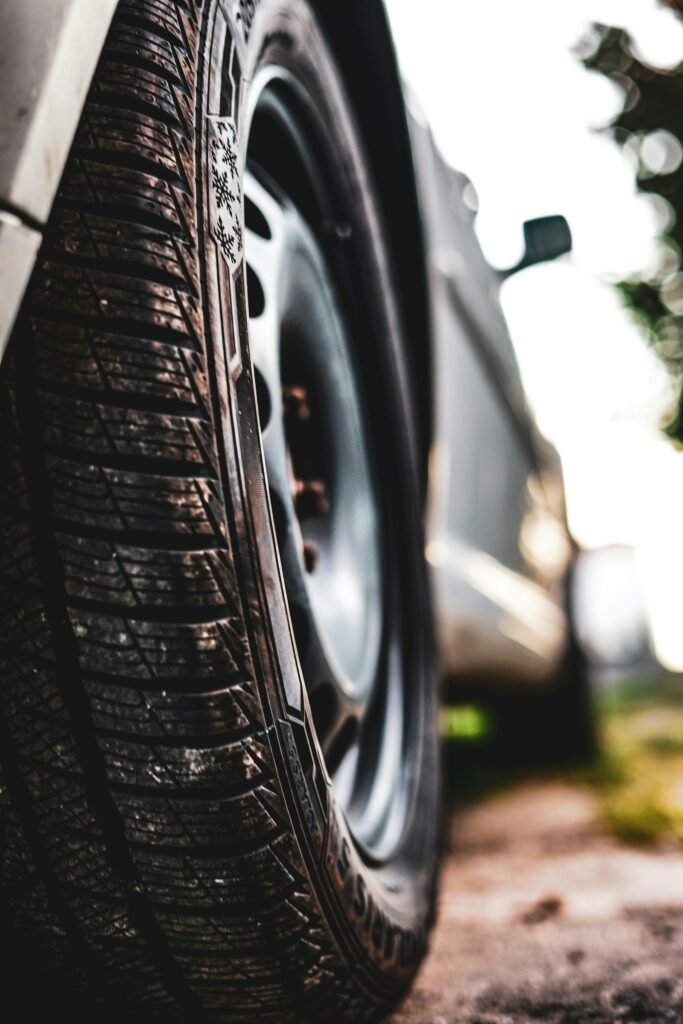
Potholes form when water seeps into cracks in the pavement, freezes, expands and breaks the surface, and then traffic pounds the weakened asphalt out. Edmonton has plenty of freeze-thaw cycles, so the pattern repeats all winter and into spring. The result is holes with sharp edges and hard, uneven bottoms.
When a tire drops into one at speed, the sidewall can be pinched between the rim and the edge of the hole. That pinch can cut the rubber, break the internal cords or bend the wheel itself. The damage is often invisible at first. A tire can look fine and still have a bulge, a slow leak or a separated belt that fails a day later.
Low-profile tires, which have a thin sidewall, are more vulnerable. So are tires that are under-inflated, because they have less cushion. Cold weather lowers tire pressure, so a tire that seemed fine in September can be soft in November and take a worse beating from the same hole.
The first five minutes after the hit
If you hear a loud bang and feel the car pull, react calmly.
- Hold the wheel firmly and ease off the gas. Do not brake hard or swerve. Let the car slow gradually.
- Turn on your hazard lights. Find a safe place to stop, ideally a parking lot, a side street or a wide shoulder, away from traffic.
- Stop on level, firm ground if you can. A slope or soft snow makes any repair harder and more dangerous.
- Apply the parking brake and turn the engine off.
- Look at the tire from a safe spot. Is it flat, bulging or just low? Do not stand in a lane of traffic.
If you are on a busy road such as the Anthony Henday, Whitemud Drive or Yellowhead Trail, and there is no safe place to stop, keep the hazards on, drive slowly to the next safe exit if the tire is only partly flat, and accept that you may damage the rim. A ruined wheel is cheaper than a collision.
Check for damage you cannot see
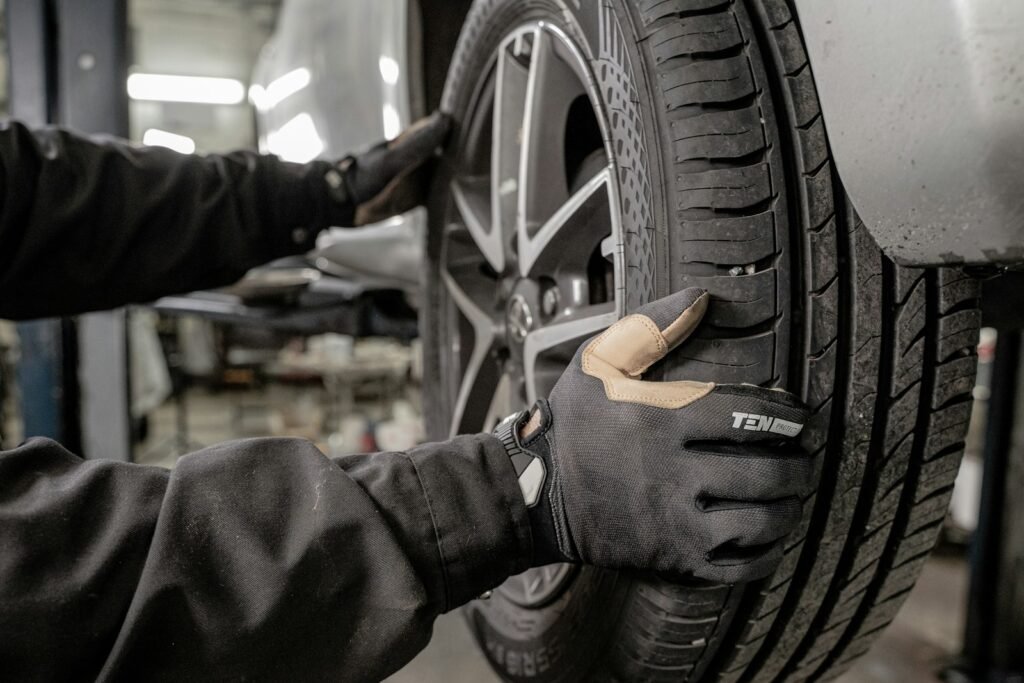
Once you are safe, walk around the car and look for the signs of a harder hit.
- A flat or fast-leaking tire, the obvious one.
- A bulge on the sidewall, which means the internal structure has failed and the tire is unsafe even if it holds air.
- A bent or cracked wheel, which may show as a visible dent in the rim edge or a wobble when the wheel turns.
- Fluid dripping under the car, which could mean the hole also caught something more fragile.
- A steering wheel that sits crooked or a car that pulls to one side, which suggests the alignment or a suspension part took a knock.
- Vibration at speed, which can come from a bent wheel or a damaged tire.
Do not ignore a tire that looks fine but suddenly loses pressure over a day or two. Slow leaks after a pothole strike usually mean a damaged bead or rim. Have a tire shop inspect it.
Spare, sealant or tow?
Your choice depends on what you have and how bad the damage is.
A full spare or a compact spare. If you have one and know how to fit it, a spare is the fastest fix. A compact spare, often called a donut, is meant for short, slow trips to a shop. Obey the speed limit printed on it. If you do not have the tools, or the ground is icy, unlevel or unsafe, wait for help. We can change a tire for you as part of our flat tire service.
Sealant or an inflator kit. Many new cars have no spare and carry a sealant kit instead. Sealant works on small punctures in the tread. It rarely works on a sidewall cut, a torn bead or a bent rim, which are the typical pothole injuries. If the damage is at the side of the tire, a kit is likely to fail.
A tow. If the wheel is bent, the tire is shredded, you have no spare, or you cannot tell what else was damaged, a tow is the safest choice. Driving on a destroyed tire can wreck the rim and brake parts. We tow on a flatbed, which is especially important for all-wheel-drive vehicles, where mismatched or damaged tires should not be dragged.
How to change a tire safely on a roadside
If you are going to do it yourself, safety comes first. Our full guide on how to change a flat tire safely goes into more detail, but the key points are these.
- Pick level, firm ground, away from traffic. Do not jack the car on ice, snow or loose gravel.
- Use your hazards, apply the parking brake and, on a manual car, put it in gear.
- Loosen the wheel nuts slightly before you raise the car, while the tire is still on the ground.
- Place the jack at the jacking point shown in your owner’s manual. Never get under a car that is held up only by a jack.
- Remove the nuts, take off the wheel, fit the spare and tighten the nuts by hand.
- Lower the car, then tighten the nuts in a star pattern.
- Check the spare’s pressure as soon as you can.
If it is dark, very cold or you are on a busy road, stop and call someone. A tire is not worth a risk.
Damage that shows up days later
Some pothole damage does not announce itself. In the next week, watch for these.
- A tire that keeps losing air, even though you see no nail.
- A new vibration at highway speeds.
- A steering wheel that is off-centre when you drive straight.
- Uneven tire wear, with one edge wearing faster than the rest.
- A clunk or rattle over bumps, which can mean a damaged shock, strut or control arm.
Ask a shop to check the alignment and look at the suspension if you took a hard hit. It is much cheaper to fix a bent tie rod early than to replace a tire that is wearing out in a few weeks.
Can you claim the cost from the city?
Many drivers wonder whether the city pays for pothole damage. Municipalities generally have a process for damage claims, and whether a claim succeeds depends on the circumstances, such as whether the city knew about the hole and had a reasonable chance to repair it. Rules and time limits apply, and they can change. We cannot tell you whether your claim will succeed. If you want to try, take photographs of the hole and the damaged tire, note the exact location and time, keep your repair invoices and check the City of Edmonton’s website for how to file. You can also report a pothole through the city’s 311 service, which helps get it fixed for the next driver.
How to protect your tires from potholes
You cannot avoid every pothole, but you can reduce the odds and the damage.
- Keep tires properly inflated. Check pressure monthly, and whenever the temperature swings. Use the pressure on the door-jamb sticker, not the number on the tire sidewall.
- Leave more space. Following too closely means you see a hole too late. A longer gap gives you time to steer around it.
- Slow down for rough pavement. The harder you hit, the worse the damage. Slowing before the hole, not in it, helps most.
- Do not swerve violently. Avoiding one hole by veering into another lane is how collisions happen.
- Watch puddles. A puddle on a damaged road often hides a pothole.
- Consider tire choice. If your car has very thin sidewalls and you drive a lot on rough streets, ask a tire shop about options.
- Check your spare. Make sure it is inflated and that the jack and wrench are in the car.
When to call Maxim Towing
Call if the tire is destroyed and you cannot change it, if you have no spare, if the wheel looks bent, if it is dark or snowing, or if you simply do not feel safe doing the job. A driver can change the tire on site, or tow the car to a shop. Our typical arrival window is 30 to 45 minutes, though weather and call volume can change that. Call (780) 604-4060 any hour. We accept cash, credit and debit. See our roadside assistance page for everything we cover, or the emergency roadside help page if the situation is urgent.
A pothole is frustrating, but it is rarely a disaster if you stay calm, stop safely and make good decisions about repair. Get the tire checked, keep your receipts and drive carefully until you know the car is sound.
What a tire shop will check
When you bring the car in after a hard hit, a good shop does more than patch the tire. They look at the inner and outer sidewall, because a cut on the inside can be invisible from the outside. They check the rim for bends and cracks, since a bent wheel can leak air slowly around the bead and also cause a vibration that gets worse with speed. They look at the valve stem and the pressure sensor, which can be knocked loose. If the tire has a bulge or a cut in the sidewall, they will almost always say it has to be replaced, because a sidewall cannot be repaired safely.
Ask about the alignment, too. A pothole can push the wheel hard enough to shift the settings, and a car that is out of alignment wears tires unevenly. A quick alignment check is a small cost compared with a new set of tires wearing out early.
If you have all-wheel drive, ask whether the other tires are close enough in wear to the new one. A mismatch between tires can strain the drivetrain, and some manufacturers recommend replacing tires in pairs or sets. It is a sensible question to ask before you pay for a single tire.
Keep a pothole kit in the car
A few inexpensive items turn a bad moment into a manageable one. Keep a small tire pressure gauge, a flashlight with fresh batteries, work gloves, a reflective triangle, a warm blanket and a charged phone cable in the car. Know where your spare, jack and wheel nut wrench are, and check the spare pressure twice a year. If your car has locking wheel nuts, keep the key where you can find it, because a missing key can turn a tire change into a tow.
It is also worth taking a photo of your tire pressure sticker, and saving our number in your phone before you need it. When something goes wrong at night or in freezing weather, being prepared saves time and stress, and it makes the whole experience safer for you and the people driving past.
A note on cold weather and tire pressure
Edmonton drivers see big swings in temperature, sometimes twenty degrees or more in a few days. Tire pressure drops roughly in step with the temperature, so a tire that was fine during a mild spell can be noticeably soft after a cold snap. Low pressure is one of the reasons potholes do so much damage, because a soft tire has less air to absorb the shock before the sidewall meets the rim. Make it a habit to check your pressure whenever the weather turns sharply colder, and top up to the number on the door-jamb sticker. It takes two minutes at a gas station and it is among the cheapest ways to protect your tires, your wheels and your wallet.
Frequently asked questions
Should I keep driving after hitting a pothole?
If the car feels normal and the tire holds air, you can continue carefully, but have the tire and wheel checked. If there is a bang, a pull or a flat, pull over safely.
Can a pothole damage a tire without a flat?
Yes. It can cause a sidewall bulge, internal belt damage or a bent rim, and these can fail later.
Can I drive on a donut spare?
Yes, but only for short distances and at the speed printed on the spare. Replace it with a proper tire as soon as you can.
Does tire sealant fix pothole damage?
Rarely. Sealant is made for small tread punctures, not sidewall cuts or bent rims.
Who changes a flat tire in Edmonton?
Our drivers can change a tire on site or tow your vehicle to a shop. Call (780) 604-4060.