
A friend’s car will not start. You have a truck and a tow strap, and the car has a gear selector with a neutral position. It seems obvious: put it in neutral and pull it to the shop. People do this all the time, and sometimes it works. But sometimes it ruins a transmission, a drivetrain or a differential, and the repair bill dwarfs the cost of a proper tow. So, can you tow a car in neutral? The honest answer is: it depends on the car, the distance and the method, and in many modern cars the safer answer is no. This guide explains why, what to check and when to use a flatbed instead.
Why neutral is not always enough
Neutral disconnects the engine from the wheels, so in principle the wheels can spin freely. But in many cars, the parts inside the transmission and drivetrain keep moving when the wheels turn, even in neutral, and not all of them get lubricated when the engine is off.
Automatic transmissions. Many automatics rely on a pump driven by the engine to circulate fluid. When the engine is off and the wheels are turning the output shaft, parts inside can spin without proper lubrication. Over a short, slow tow it may be fine, but over distance or speed it can overheat and cause damage. Some manufacturers prohibit towing with the drive wheels on the ground, or limit it to a short distance at low speed.
Front-wheel-drive cars. If the front wheels are on the ground, they turn the transmission and axles. In an automatic, that can be harmful, as above. A tow with the front wheels lifted and the rear wheels rolling is often the recommended method for a front-wheel-drive car, which requires a wheel-lift or a flatbed.
Rear-wheel-drive cars. If the rear wheels are on the ground, they turn the driveshaft and transmission. Some manufacturers say the driveshaft must be removed or the rear wheels lifted.
All-wheel-drive and four-wheel-drive vehicles. These are the most vulnerable. All four wheels are connected through differentials and a transfer case, and if some wheels turn while others do not, components can be strained or damaged. Towing with two wheels on the ground is generally not recommended. A flatbed is the safe method.
Electric and hybrid vehicles. Electric motors can generate electricity when the wheels turn, and many manufacturers say not to tow with the drive wheels on the ground. Often the instructions say to use a flatbed. See our article on towing electric vehicles and AWD cars.
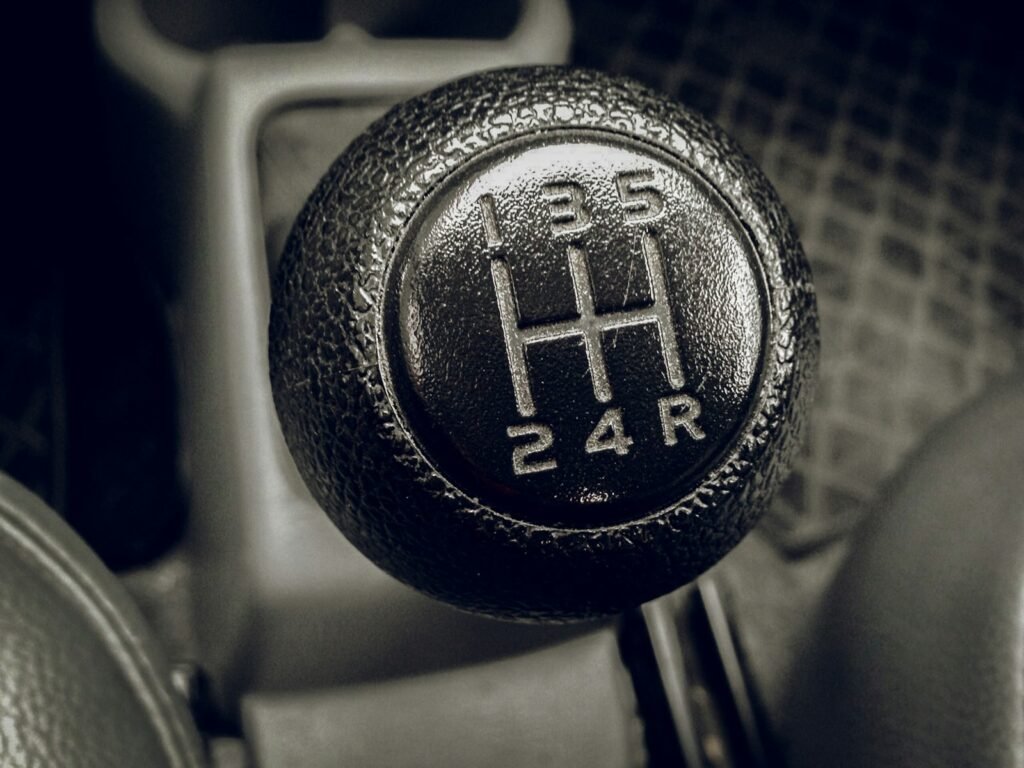
Manual transmissions. These are generally more tolerant, because the transmission does not depend on an engine-driven pump in the same way. Many manual cars can be towed with the drive wheels on the ground in neutral, but you must still check the manual.
Your owner’s manual has the answer
Every manufacturer publishes towing guidance for its vehicles, usually in the owner’s manual under a heading such as towing or recreational towing. It will tell you whether the car can be towed with all four wheels on the ground, which wheels may be on the ground, any maximum speed and distance, and any steps you must take first, such as releasing the parking brake, turning the ignition to a certain position or pulling a fuse. Follow it exactly. If the manual says the vehicle should not be towed with its wheels on the ground, believe it.
If you cannot find the manual, search for the make, model and year online, or call a dealer. Do not guess. A short call can save a very expensive repair.
Other risks of tow-in-neutral
Even if the drivetrain can take it, there are other problems with an amateur neutral tow.
- No power steering or power brakes. With the engine off, steering is heavy and brakes need more force. The car being towed can be hard to control.
- Steering lock. If the key is removed or the steering column locks, the car cannot steer at all.
- A broken strap or hitch. A rope or strap that snaps or comes loose can whip, injure someone or let the car roll into traffic.
- Brake lights and signals. The towed car needs working lights to be seen, and the tow vehicle needs to be able to stop both.
- Snapping and snatching. Without careful, smooth driving, the strap alternately goes slack and tight, which can damage both vehicles.
- Legal and insurance issues. Towing a vehicle improperly on public roads can raise legal and insurance problems. Check the rules and your coverage.
Short tow, long tow
A very short, slow move, such as pulling a car a few metres out of a parking spot or onto a driveway, is not the same as towing it across the city. Manufacturers’ limits often allow short distances at low speeds even in cases where a long tow is prohibited. But the limits are in the manual for a reason, and the cost of a mistake is high. If the car needs to travel more than a short distance, or on a busy road, use a professional tow.
Why a flatbed avoids all of this
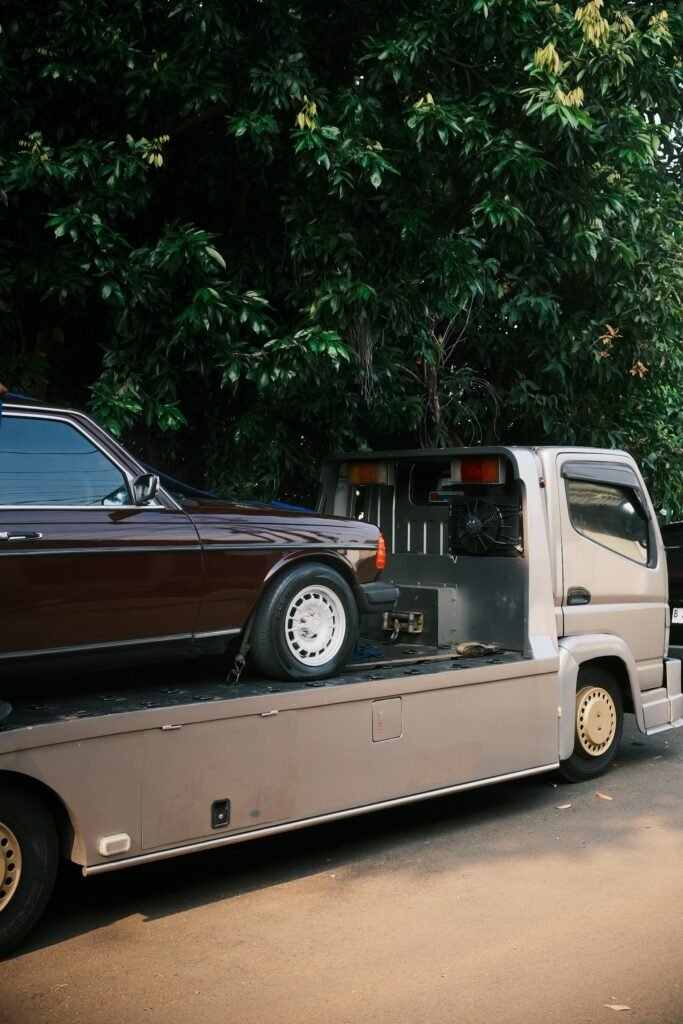
A flatbed lifts the whole car off the ground, so none of the wheels turn and none of the drivetrain moves. It does not matter whether the car is front-, rear- or all-wheel-drive, automatic, manual or electric. The engine, transmission and differentials stay still and safe. It is the method manufacturers most often recommend, and it is the one we use for most vehicles. See our flatbed towing in Edmonton page. For a fuller comparison of towing methods, read flatbed vs hook-and-chain vs wheel-lift towing.
When people do tow in neutral, how to do it as safely as possible
We do not recommend an amateur tow, but if you have checked the manual and it explicitly allows it, the following points reduce risk.
- Use a proper tow bar or a strap rated for the weight, not a rope.
- Attach to the factory tow points, never to bumpers, suspension parts or other fragile places.
- Put the car in neutral, release the parking brake and leave the ignition in the position the manual specifies, so the steering stays unlocked.
- Make sure the towed car has someone in it to steer and brake.
- Keep the speed low and the distance short.
- Use hazard lights on both vehicles.
- Leave extra distance, and communicate with agreed signals.
- Take corners wide, and avoid hills where you can.
If anything feels wrong, stop. A tow gone wrong costs far more than a call to a professional.
Winter makes it worse
In Edmonton’s winter, snow and ice make amateur tows even riskier. A heavy car on a strap can slide on ice and push the tow vehicle off line. A strap can freeze or stiffen. Visibility is poor and drivers have less time to react. If your car is stuck or will not start in a snowy lot, the best move is nearly always to call a professional with a flatbed and a winch. See our guide on what to do when your car is stuck in a snowbank.
What a tow truly costs, compared with a repair
People often try a neutral tow to save money. But a damaged transmission can cost thousands to repair or replace, while a professional tow usually costs a small fraction of that. The sums rarely favour the shortcut. For more detail on what affects towing prices, see our guide on how much towing costs in Edmonton.
Call Maxim Towing
If your car will not move, call us at (780) 604-4060 any hour. We will ask what you drive and send the right truck, usually a flatbed. Our typical arrival window is 30 to 45 minutes, though weather and call volume can change that. We accept cash, credit and debit. See our roadside assistance page or the contact page.
What actually goes wrong inside
It helps to picture what is happening. In many automatic transmissions, a pump driven by the engine pushes fluid through passages to lubricate and cool the gears and clutches. When the engine is off and the car is being pulled, the wheels turn the output shaft, and gears and bearings spin, but the pump is not running. Without fluid pressure, those parts run dry or nearly dry. A few minutes may not do harm, but distance and heat can scorch bearings, wear gears and leave metal debris in the system. You may not see the damage right away. It shows up later as slipping, noises or a transmission that fails outright, and by then nobody connects it to the tow.
Differentials and transfer cases are similar. In an all-wheel-drive car, if only some wheels are on the ground, the parts that are meant to turn at slightly different speeds may be forced to turn at the wrong ones. That strains clutches, couplings and gears. The damage can be expensive, and it can be hard to prove where it started.
Myths about towing in neutral
Myth: neutral means nothing is turning. Neutral disconnects the engine from the transmission output, but the wheels, axles, driveshafts and many internal parts still turn when the car moves.
Myth: if it is an automatic, it is the same as a manual. Automatics and manuals can have very different lubrication and design, which is why manufacturers give different instructions.
Myth: it is fine for a short distance, whatever the car. Some cars have a short-distance allowance, but many do not, and a few forbid it altogether. Your manual decides.
Myth: a bit of damage will not matter. A worn transmission can cost thousands to repair, and a new one even more. It is almost never worth the risk to save the price of a tow.
Myth: a towing strap is all you need. A strap is a tool, but safe towing also needs correct attachment points, a driver in the towed car, working lights and an understanding of the rules for your vehicle.
Pulling a stuck car out is not the same as towing
Dragging a car a short way out of a snowbank, or onto a flat surface, is a recovery, not a tow. It still needs care. Use proper recovery points rather than bumpers, pull slowly and steadily, and keep people out of the line of the strap in case it breaks. If the car is deeply stuck, or on a road, or the ground is icy, a professional with a winch is safer. We cover this in our guide on getting a car out of a snowbank.
Questions to ask a tow operator about your vehicle
A good tow company wants to know what you drive, because it changes the method. Expect to be asked the make, model and year, whether the car is front-, rear- or all-wheel drive, and whether it is automatic or manual. Expect to be asked whether the wheels turn and whether the steering is locked. If you are not asked, ask them yourself whether they will use a flatbed, and why or why not. If the answer is a hook-and-chain on an all-wheel-drive or electric car, say no and find another company. A thoughtful operator will explain their approach clearly and will not pressure you into the quickest method.
Quick decision guide
When a car will not move and you are wondering what to do, a simple sequence helps. First, check the manual for what the manufacturer allows. Second, ask whether the distance is short and the road is quiet, or long and busy. Third, think about the cost of being wrong, which for a transmission or an all-wheel-drive system can be very high. If there is any doubt at all, call a professional with a flatbed. It protects your car, it protects the people on the road and it removes the guesswork. A short call and a clear explanation of your vehicle is all it takes to get the right truck sent, and we are always happy to talk it through with you, whether you end up booking a tow or not.
Many drivers are also surprised to learn that a flatbed is not necessarily more expensive than other methods, and it often avoids the extra costs that come from damage. Ask for the expected total before the truck is sent, and compare it against the risk of doing it yourself.
Frequently asked questions
Can I tow my car in neutral?
Only if your owner’s manual says it is allowed, and then usually for short distances at low speed. Many automatic, all-wheel-drive and electric vehicles should not be towed with drive wheels on the ground.
Can I tow an automatic car in neutral?
Some can for short distances, but many manufacturers prohibit it because transmission parts can be damaged without lubrication.
Can I tow an all-wheel-drive car with two wheels on the ground?
It is generally not recommended. A flatbed is the safe method.
Is a flatbed always better?
For most vehicles, yes. It carries the car with all wheels off the ground, avoiding drivetrain damage.
Where do I find the towing rules for my car?
In the owner’s manual under towing or recreational towing, or by asking a dealer.